
Once you understand neuroplasticity your life will never be the same again
Tim Denning @Tim_Denning · Wed Apr 22 11:15:20 +0000 2026
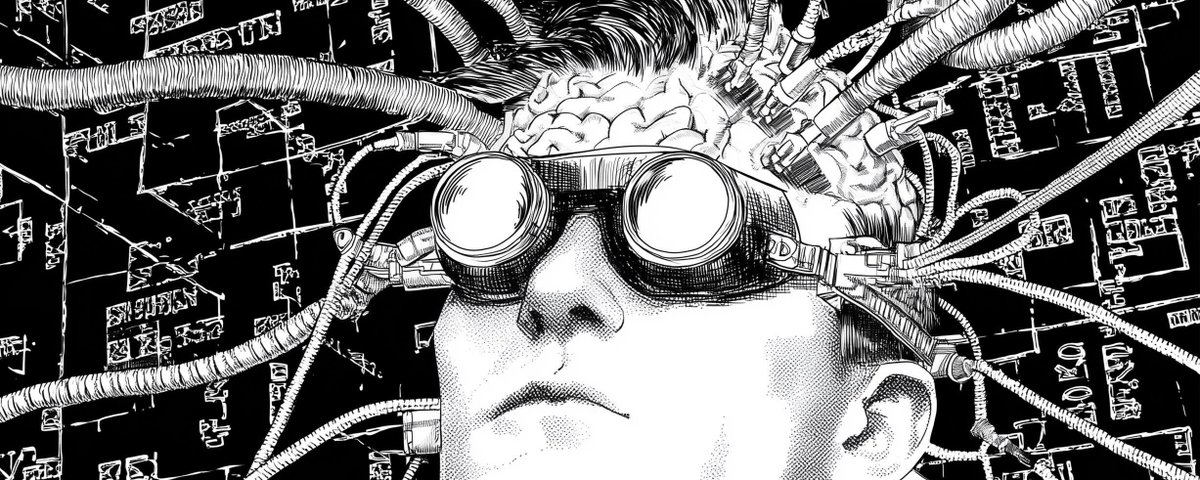
Neuroplasticity is a life-changing idea.
But to unlock it you must understand it in simple terms, and 99% of the writing about it comes from PhDs who make it unnecessarily complex. Bastards.
I first heard about neuroplasticity from a Tony Robbins event. I cheered, laughed, and rah-rah’d my way to the end of the event. In the last hour on that day, Tony introduced the idea of neuroplasticity. I was ready to switch off and sleep.
But Tony quickly pivoted to how people used it to change their lives.
This got my attention because I was a drunken, burned out, fat slob at the time. I’d been trying to change my life for years and nothing worked. Then I realized what Tony was trying to say.
Wanting to change isn’t enough. Having a dream isn’t enough. Good intentions aren’t enough. The only way to experience real change is to first change your brain.
Neuroplasticity is the secret high performers have known about for years.
It’s still not mainstream. But if you understand it you can literally achieve any goal & rise to the top of your field while the high school bullies scream “How’d they do that?”
Let me explain the power of neuroplasticity and how to use it in under a few minutes, without all the psychological jargon and brain science.
Barbara Arrowsmith-Young (not a character in Game of Thrones) grew up in a confusing, messed-up world.
On the surface she was a bright spark. Einstein-level genius in some respects. But there were freaking holes in her brain.
She couldn’t do simple things like tell the time because her brain couldn’t grasp the relationship between the hour and minute hands. She couldn’t for the life of her understand cause and effect. If she heard the sentence, “Tim was punched by a big girl driving a Tesla,” she couldn’t tell you who was bruised and who was doing the punching.
Nothing made sense in Barbara’s mad world. It was nearly time for her to adopt a label and take pills to solve it while telling people “Oh well, I’m broken and therefore can’t get a job or be part of society.”
The geniuses of the 50s and 60s while smoking ciggies with grins on their faces told her she was retarded in some areas… and there was nothing she could do.
She’d have to learn to live with it.
99% of people accept their diagnosis. It holds them back in life.
But not Barbara. She quietly said to herself “F U.” The issue wasn’t the doctors in white coats or the beautiful array of pills she could have gotten high off for the rest of her life while on a comfy pension. No.
The issue was that the adult brain was considered fixed and immutable.
You get the brain you’ve got and if you don’t like it, pal, tough t!tties.
But Barbara stumbled upon a different idea. One that was radical, and extremely unconventional at the time. She began to wonder:
If the brain can change itself, why can’t I build the parts I’m missing?
Barbara didn’t waste any time, bless her soul. She turned on psychopath mode and began doing extreme mental calisthenics. She’d sit in front of clocks for 100s of hours and force her “retarded” brain to figure out the relationship between the hands.
It was torture. It was pure exhaustion.
And Barbara loved thinking she was a crazy b*tch for doing it.
Out of nowhere, one afternoon, the brain fog lifted. She could tell the time. Shortly after she could finally understand grammar. Lastly, she finally understood logic.
This wasn’t an accident. Or a Tim Ferriss life hack from the 4-hour workweek. She had permanently and physically altered the neural pathways of her own mind.
On the surface she solved a learning disability. But at a much deeper level she proved the brain can change at any age. It’s a living system you can give instructions to, and program to do and believe whatever you want.
Barbara discovered what we now call neuroplasticity.
Neuroplasticity is the solution to every problem in life
You’re likely not like Barbara. You probably don’t have a learning disability and doctors don’t call you retarded (although Andrew Tat3 bros might).
But everyone including me experiences anxiety, limiting beliefs, disempowering thought patterns, and failure. It’s easy to treat these traits or experiences as permanent. And… until you realize they’re not, nothing will change.
Got divorced? Lost your job? Loved one died? Dog got cancer? Someone stole your life savings? The traditional route is to replay these scenarios over and over in your mind until they steal your personal power.
They become roadblocks, limitations, and dare I say it, excuses.
Neuroplasticity is different. You don’t seek to reminisce or focus on the past. You seek to change your brain. To rewire it. To reprogram it.
The meaning of a situation is whatever meaning you give it.
Once you understand your brain can radically change whenever you want, you start to become the architect of it instead of its slave.
Neuroplasticity is the brain’s ability to rewire itself based on repeated experience. But what people misunderstand is it’s not something you turn on. It’s already happening. What matters is, are you rewiring your brain every day in your favor or to accidentally work against you?
Right now as you read this, your brain is wiring itself around:
- What you focus on
- What you practice
- What you emotionally react to
Your brain is made of billions of neurons connected by pathways. When you repeat something, those pathways get stronger and faster. When you stop using something, those pathways weaken or disappear.
It’s like a trail in the Amazon rainforest:
- Walk it once → barely visible
- Walk it daily → becomes a clear path
- Ignore it → it gets overgrown
The challenge is to walk the right paths every day in your mind that are good for you, not walk the bad paths that are full of addiction and weakness.
Self-improvement lied to you. Goals are bullsh*t.
I’ve long believed self-improvement is bullsh*t. Now I know for sure it is. Neuroscience proves it.
Your brain controls everything. And it doesn’t give a flying f*ck about your goals, intentions, or Lambo vision boards. Nope.
Your brain asks itself one question repeatedly like a psycho: “What should I get better at?” And it answers based on your behavior, not your goals.
Dr Dominic NG explains:
The secret to becoming who you want to be is just pretending you already are. As a neuroscientist, it’s action that rewires the brain. Not the other way around.
You can wank off all day to how you want to start a business, have more freedom, and get wealthy. Your mind doesn’t care. Your actions shape your mind.
Writer Eduardo Briceno explains:
Neuroplasticity rewards repetition, not intention. Your brain doesn’t care that you wanted to exercise. It only knows that you did exercise, fifty days in a row.
The bottom line is wanting an outcome is ridiculously stupid. Stop it. Instead, repeat the behavior attached to the outcome you want. If you want to be fit, then show your brain the actions of what a fit person does every day. It’ll then rewire your brain toward the new behavior using neuroplasticity.
I did this with writing. I always wanted to be a writer. But I had no clue. So I wrote online every day and published 7000+ essays. Along the way, I got offered a book deal from Penguin with a 6-figure advance.
Feels like a Houdini magic trick once you understand this.
The simple path to achieve stupidly big goals
When you have a new goal, like becoming an entrepreneur, you’re effectively trying to leave behind your old employee identity.
People make the mistake of waiting for their identity to change. Or mapping out the change of identity as if it’s a 4 year university degree from Harvard.
Worse, some aren’t even aware they need a new identity to achieve their goal. They think an employee mindset will help them invest $500K in their self-education and build a $1M per month online business. It’s laughable.
The brain is smarter than we give it credit for. It doesn’t wait for your identity to change. The daily actions you take create new neural pathways, and slowly the brain starts treating whatever new behavior you’ve embraced as the new normal.
Act first. Identity catches up later.
You don’t think your way into a new identity. You act your way into one – @mindpressmedia
But I can’t change… wah wah wah
Neuroplasticity is the discovery that the “map” of who you are is written in pencil, not ink.
You can 100% change. That’s not the question. The question is “Are you willing to change?” Most people will answer yes, but then they’ll sit on the couch and not take actions that demonstrate real change.
So their brains will just wire themselves to do more of nothing and they’ll keep blaming the president, society, enemies, gurus, or whatever other target they can find.
Wanting to change isn’t a feeling or a goal you assign to 2028. It’s a decision. Your brain cannot work in your favor until you decide change is a must today.
This part of neuroplasticity pisses people off
Andrew Huberman says “Errors are the basis for neuroplasticity and learning.” Read that again. If you want to rewire your brain you must make more errors.
But people-pleasing humans hate making errors. We do everything we can to avoid them. We hate the feeling of making an error. And so our brains can’t experience the magnificent power of neuroplasticity.
High performers love making errors and that’s why they get what they want in life. Average people hate making errors and don’t learn much which is why they feel like cr*p and can’t explain why.
Make more errors with the Joker’s smile on your pretty little face.
There’s a huge downside of neuroplasticity that cannot be avoided
Earlier, I said the brain is rewiring itself no matter what. This isn’t a new idea. If you’re not aware of neuroplasticity, it’s likely been working against you since birth.
The problem with neuroplasticity is it works in reverse too. Stress can rewire your brain in the wrong direction. Chronic stress strengthens neural pathways for anxiety, fear, and overreaction.
This means your brain harnesses the power of neuroplasticity to make you better at being stressed.
Boy, the world now makes a lot more sense, right?
Now you know why the average person is in outrage mode 24/7 and throwing bananas at their TV when a politician says something they don’t like. They trained their brains to overreact and produce this state of mind.
The brain isn’t smart enough to know what new neural pathways will work in your favor and which ones will destroy your life. It just automates whatever you repeat.
The whole dumb-dumb movement the Atomic Habits book created about choosing better habits may actually be life-changing after all. All we need now is Mark Manson to write a new version and put the F-Word in the title to make it cool and hip.
Repetition is how your mind learns. Not motivation. Not inspiration. Repetition. Do something consistently, and your subconscious accepts it as truth. That’s how you reprogram.
– S.M. Brain Coach
Here’s how to make neuroplasticity work for you instead of wage war against you
I will keep this part simple.
1. Figure out what you want your brain to get good at
You now know your brain doesn’t give a f*ck about your goals or intentions. Decide what actions you are going to take and repeat.
If you:
- Check your phone 80 times a day → you train distraction
- Write every morning → you train clarity
- Avoid hard things → you train avoidance
The first step is the hardest one. You must pick the behavior, not the outcome.
Instead of “I will build a 6-figure business” like every other dreamer, make the daily action to pitch your offer to an email list. Instead of “Write a book” like a starving romantic artist in a wife-beater singlet, make the goal “Write daily on social media before 9am.”
2. Use repetition like a freaking bazooka
Neuroplasticity runs on frequency.
- Once = nothing
- Occasionally = weak wiring
- Daily = identity shift
You need boring consistency to get neuroplasticity working in your favor. The brain rewires itself when something becomes normal – not when it’s exciting, nice to have, or makes you rich on Instagram.
High performers go a step further. They add intensity + obsession.
3. Bleed out the patterns you don’t want
Many people mistakenly see neuroplasticity as adding positive actions and behaviors. That’s only half the story. It’s also about subtraction. Mental pruning as they call it.
Unused neural pathways weaken. So remove negative triggers, make your bad habits harder to practice, and interrupt bad new behaviors as early as possible.
You can’t fight bad habits like a gladiator and win. You can only starve those pieces of sh*t by removing their oxygen supply and letting them bleed out on the curb until they can’t survive in your head anymore.
4. Give the brain enough time to rewire itself
Neuroplasticity doesn’t make dreams of Lambos a reality in a day. It needs time to work its magic. Here are the rough timelines:
- Week 1: friction
- Week 2–3: familiarity
- Week 4+: automaticity begins
Unsuccessful people quit right before the new neural pathways are built and the brain has completely changed. They’re impatient suckers in diapers. Instead, give your brain time to adapt to the new behavior.
If the new behavior still feels hard, it means neuroplasticity is working. Sing hallelujah.
The uncomfortable truth
Neuroplasticity isn’t new. Tim Denning didn’t invent it (son of a gun).
Neuroplasticity has existed since humans took over from the dinosaurs and got together after a giant big bang (giggity giggity). Neuroplasticity is on. It’s working right now. It’s been running your life.
So the real question isn’t, “Timbo, can I really change my brain and be a special snowflake like you?” Nope. The hard, uncomfortable question is this:
“What am I currently training my brain to become?”
Because whether you’re consciously aware of it or not, you’ve been training your mind every day for your entire life.
The software is already running in your brain. Now the decision is, do you want to take back control from the drunk driver that’s been programming your brain to date?
If so, change your behavior. Reinforce it with repetition. Let neuroplasticity do the rest.
If you found this helpful:
- Follow me @timdenning for more posts on money, freedom, and digital businesses.
- Then, I’d appreciate it if you could scroll back to the top and repost this X article to help others.
— Tim